Shin Guard for Prostheses
TU Delft & Ossur, 2022
Master’s Thesis Project
This project was published in the Dutch Journal of Positive Psychology in a column written by Dr. Pieter Desmet.
The Brief
Össur leads the assistive devices industry in high performance sports prosthetics. Children are often as physically demanding as athletes with their prostheses. This makes Össur an ideal match in hardware, but demand for this product line is low.
Despite the functional capabilities of their prostheses, many preteens feel insecure on the field, viewing their prostheses as unsuitable for exercise. Össur asked me to investigate the problem space of children’s lower limb prosthetics to reach user insights and recommend product directions.
Outcomes
- Children’s prosthetics Insights report
- Preteen interview methodology
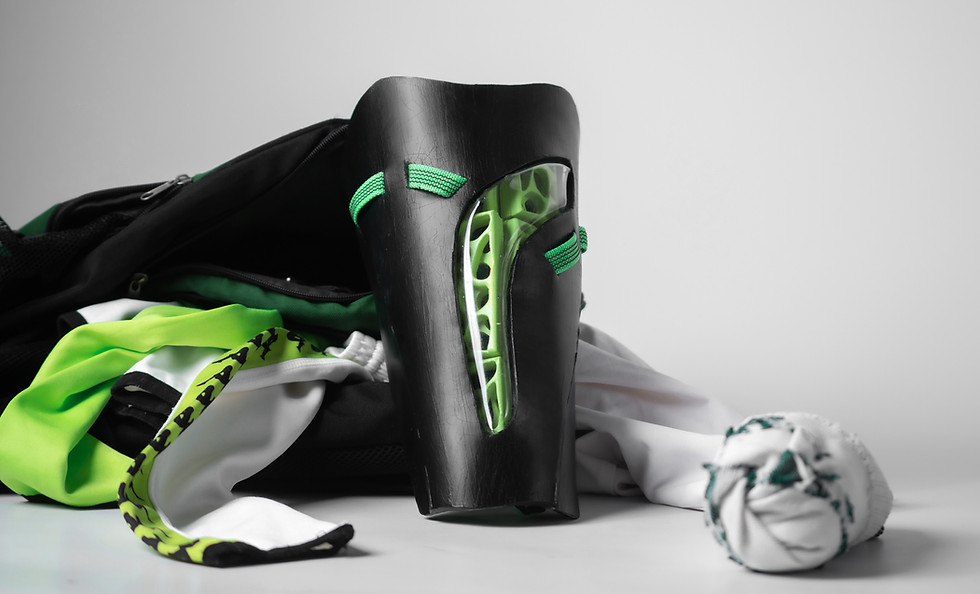
- Product concept for prosthesis accessory
The Process
I set up a research plan that builds on a psychology driven design approach. To understand the roadblocks to desirability, I framed the central research question around core psychological needs of preteens: how can a prosthetic leg contribute to the self-confidence and emotional wellbeing of young teenagers?
I defined a narrow target group for most impact: one that feels pain points strongly, and is most likely to benefit from Ossur’s existing products. Preteens are the ideal demographic, they both feel the angst of teenagers and partake in high-intensity childhood play. For user interviews, I developed a range of exercises tailored for preteen boys, designed to uncover their value systems—their priorities, motivations, and concerns.

Crafting a wellbeing-centered research plan

Preteens as the target group and as experts
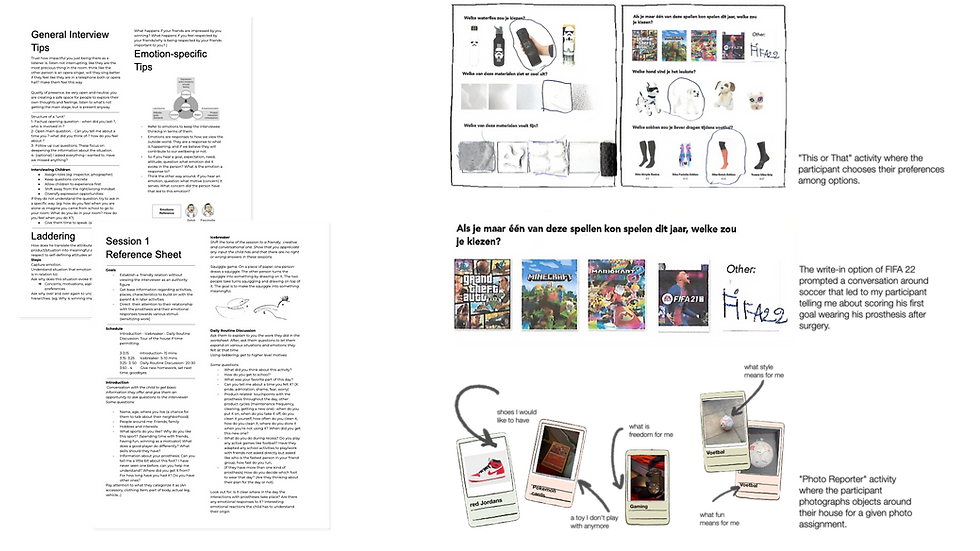
Contextualizing desk research with user interviews
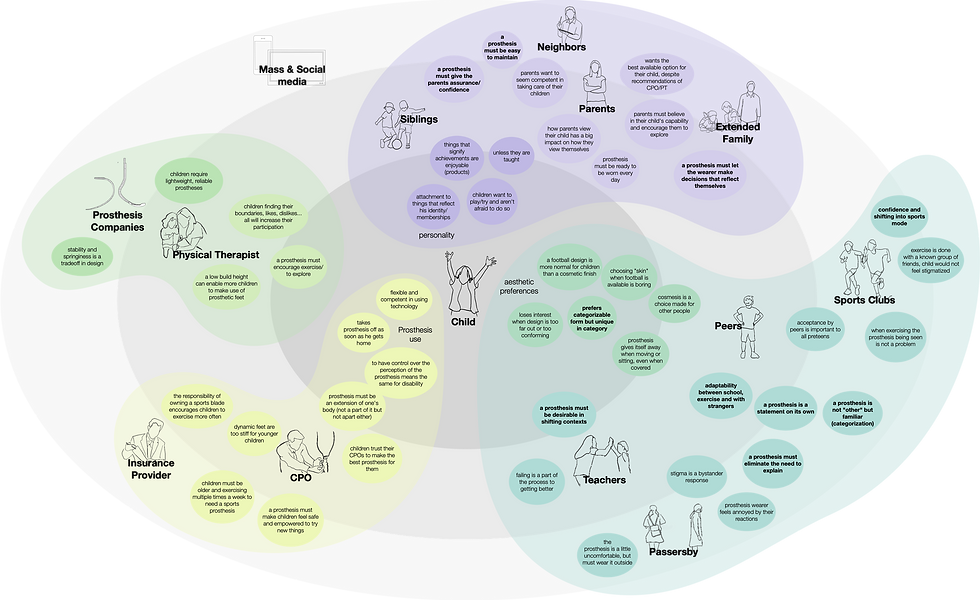
Synthesizing research to inspire design directions
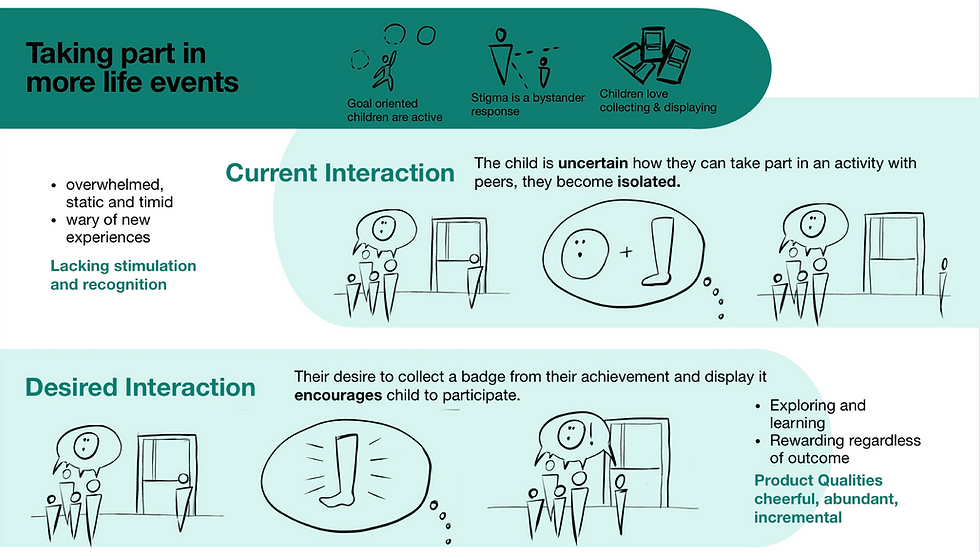
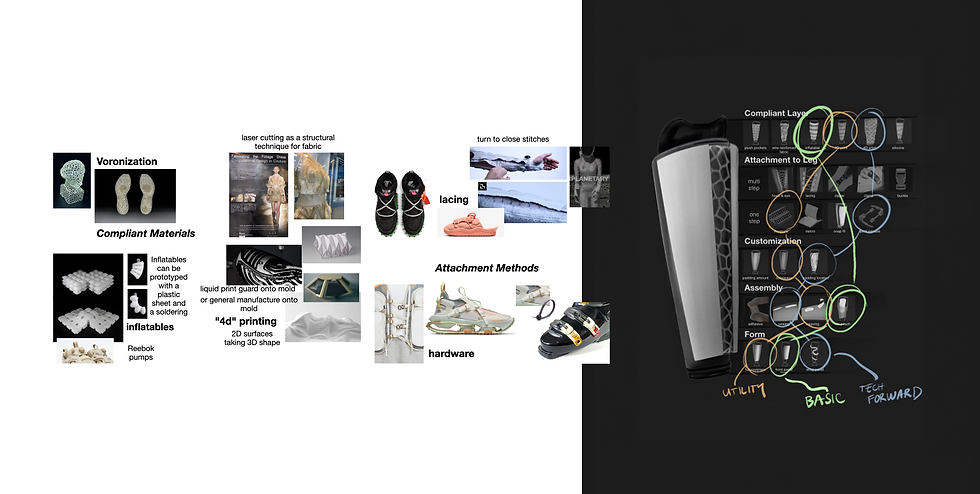
Engineering-enabled design directions
The Impact
This process led to a final outcome of a new user interview approach that is demonstrated through a product concept that meets the initial goal of contributing to the confidence of preteens with disabilities. Overall, the unstructured thesis space allowed me to deeply engage with many topics and activities to discern what activities work and which insights matter. Through this self-governed process, I stitched together an end to end design process that I can confidently execute.
-
The tactical research plan enabled a depth of insights new to client for a priority demographic.
-
My care for user wellbeing through positive psychology led to alternative design methods and thinking
-
I learned to use interview time strategically, to prioritize among many concerns identified in desk research. This was possible through building an interview approach for a context known to be difficult, children with disabilities.
-
Experimented with many forms and layers of research synthesis for a wide breadth and depth of information.
-
I involved client expertise in product design to narrow down the opportunity space.
